Home Lab

Home Lab refers to a personal computing environment set up at home for learning, experimentation, and self-hosting services. It typically includes servers, networking equipment, and various software platforms used to practice IT skills, test applications, and host personal projects.
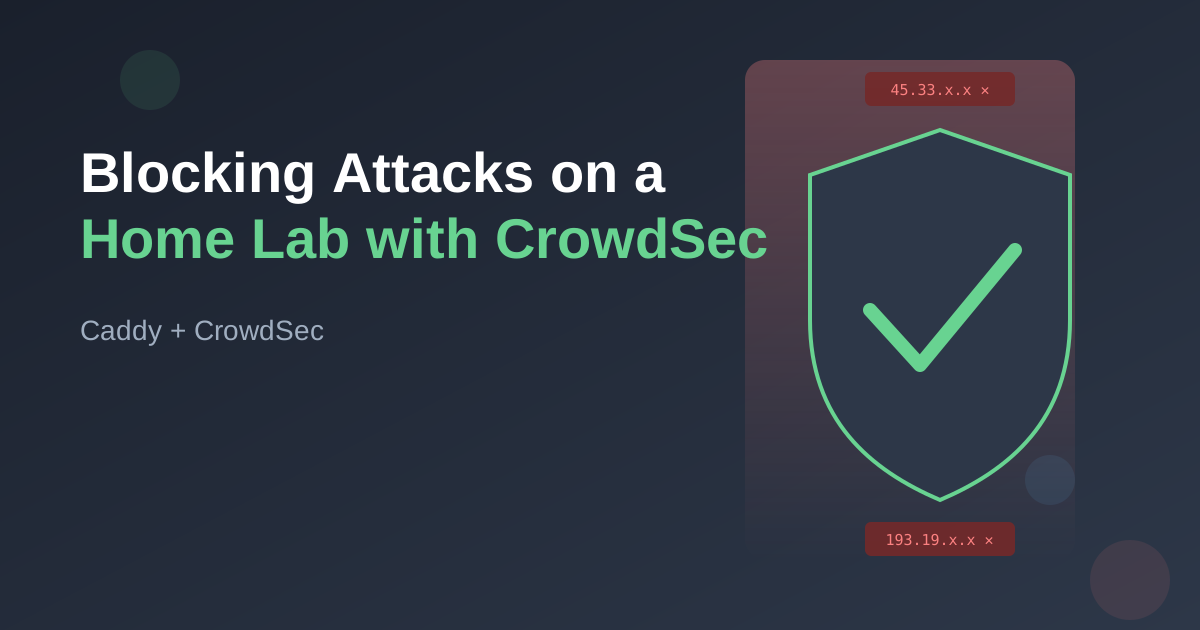
Blocking Attacks on a Home Lab's Reverse Proxy with CrowdSec

How CrowdSec is wired into the Caddy reverse proxy in front of a self-hosted home lab - a custom xcaddy build with the CrowdSec bouncer plugin, the scenarios that parse Caddy's access log for attacks, the community blocklist that bans IPs before they ever probe you, and the actual numbers seen after a week of internet exposure.

Read more

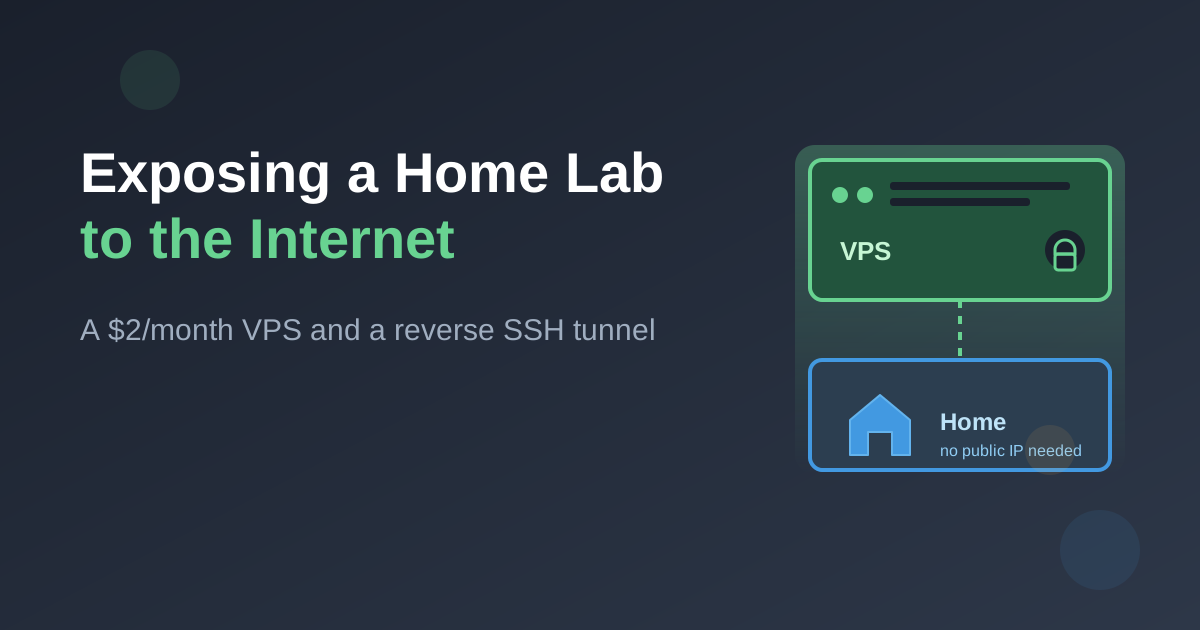
Exposing a Home Lab to the Internet with a $2/month VPS

How to publish self-hosted services running on a home server to the public internet using a cheap VPS and a reverse SSH tunnel - no port forwarding, no static IP, no Cloudflare in the middle. Covers the systemd/autossh setup, the double-hop Caddy config, buying a domain, why a static IP from your ISP usually isn't worth it, and using the same VPS as a whole-home VPN.

Read more

Self-Hosting Your Photos with Immich

Part 4 of the home lab series. A step-by-step tutorial for self-hosting Immich - a fast, private Google Photos replacement - on your home lab, including the multi-container compose file, hardware-accelerated machine learning on the Intel N100, a Caddy entry for photos.home.arpa, and backups for the data you can't afford to lose.

Read more

Your Own Media Server: The *arr Stack

Part 5 of the home lab series. A step-by-step tutorial for building an automated media server with the *arr stack - Jellyfin, Sonarr, Radarr, Prowlarr and a Transmission download client - all on the home lab, behind Caddy.

Read more